Search
India is moving to scale up its critical mineral recycling ecosystem as the National Critical Mineral Mission (NCMM) transitions from policy formulation to implementation, with a focus on building domestic recycling capacity, strengthening feedstock availability, and developing battery-grade materials for strategic sectors. The shift comes amid growing concerns around mineral security, evolving battery chemistries, and rising e-waste generation.
The Centre recently approved the ₹1,500-crore Critical Mineral Recycling Incentive Scheme under the NCMM framework, aimed at supporting the recovery of critical minerals from secondary resources such as spent batteries, e-waste, black mass, magnet scrap, and other waste streams.
Under the scheme, 58 companies have been approved as eligible participants. With a pledged recycling capacity of about 850,000 tonnes per annum and proposed investments of around ₹5,000 crore, the selected companies span key segments including battery recycling, e-waste processing, and recovery from other waste streams, reflecting strong industry interest and growing momentum in building India’s critical mineral recycling ecosystem.
Building a value-chain approach
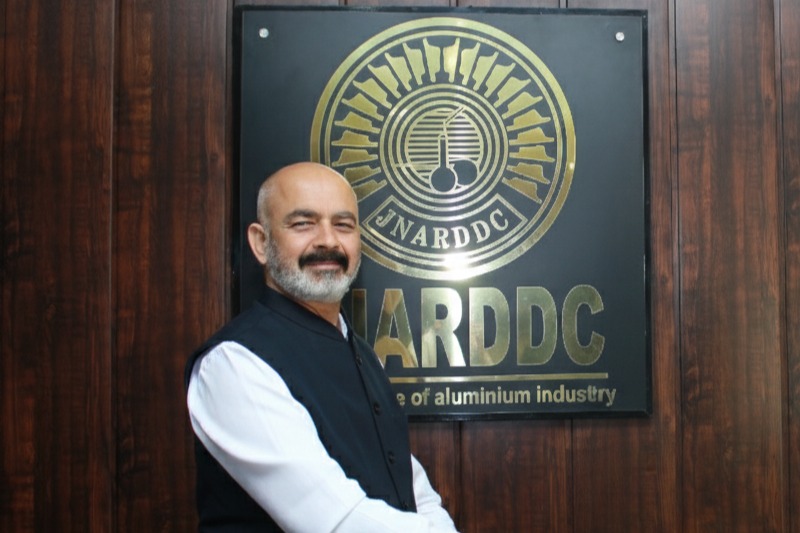
According to Anupam Agnihotri, Director, Jawaharlal Nehru Aluminium Research Development and Design Centre (JNARDDC), India’s strategy extends beyond merely creating recycling capacity.
“We seek to build a full value-chain recycling ecosystem, not merely processing capacity. The objective is to ensure that recovered critical minerals from spent batteries, e-waste, and other secondary resources are refined to battery-grade and internationally acceptable quality standards, suitable for use in advanced manufacturing and, over time, export markets,” he states.
Agnihotri notes that the incentive scheme has been designed with an emphasis on value addition, recovery efficiency, and product quality. He points out that the focus is not on supporting only preliminary processing or generation of intermediate materials such as black mass, but on encouraging facilities capable of downstream refining and production of high-value outputs in usable and marketable forms.
“The scheme framework places importance on yield, purity, and environmental compliance. This is essential because global competitiveness will depend on India’s ability to produce materials that meet the specifications required by battery, electronics, renewable energy, defence, and advanced manufacturing sectors,” he says.
Agnihotri further adds that initiatives such as the Advanced Chemistry Cell PLI Scheme are expected to create domestic demand for high-quality recycled materials and help Indian recyclers align with global specifications and supply-chain expectations.
“International engagements such as the India–EU Trade and Technology Council (TTC) will support cooperation on critical minerals, battery value chains, recycling standards, traceability, and sustainability, helping Indian industry align with global market requirements,” he informs.
The recycling push is also expected to support India’s rare earth ecosystem. According to Agnihotri, recovery of rare earth elements such as neodymium, praseodymium, and dysprosium from end-of-life magnets and magnet scrap can create an additional domestic raw material stream for downstream magnet manufacturing under the recently notified ₹7,280-crore Rare Earth Permanent Magnets (REPM) scheme.
“In this way, the recycling scheme under the Ministry of Mines can act as an upstream enabler by creating an additional domestic source of rare earth raw materials, while the REPM scheme creates downstream demand for high-performance magnets required in electric vehicles, wind turbines, electronics, defence and other strategic sectors,” he explains.
Agnihotri says India’s long-term competitiveness will depend on “quality-linked incentives, reliable feedstock systems, proven refining technologies, and traceable, environmentally compliant production.”
Technology competitiveness and evolving recycling systems
As India attempts to scale domestic recycling infrastructure, industry stakeholders say technological capabilities are improving rapidly, although economic viability will continue to depend on recovery efficiencies and purity levels.
 According to Rahul Gogi, Vice President, Growth & Strategy of Recyclekaro, current recycling technologies deployed by Indian recyclers are already becoming competitive with imported refined materials.
“Today’s hydrometallurgical and integrated recycling technologies deployed by India’s R4 recyclers are already competitive with imported refined materials, especially when you factor in logistics, supply chain risks, and price volatility. More importantly, domestic recycling is a strategic hedge,” he states.
Gogi notes that continuous research and development by Indian recyclers is improving recovery efficiencies and strengthening the role of secondary resources in India’s critical mineral strategy.
“It is very important for Indian players to keep developing indigenous technologies, as battery chemistry is evolving and e-waste generation is hitting an all-time high. Having said that, efficiency as well as purity grade are important for economic viability,” he adds.
Feedstock availability emerges as a key concern
Even as recycling capacity expands, both policymakers and industry representatives acknowledge that feedstock availability could become one of the largest constraints for the sector.
Gogi points out that India’s collection ecosystem for e-waste and battery waste continues to remain dominated by informal channels.
“It is widely known that even today, more than 90% of India's e-waste and battery collection side is still controlled by informal players. This creates significant cost overheads for serious recyclers as they have to compete with them for the procurement of feedstock,” he states.
While he acknowledges the importance of informal players to the circular economy, Gogi says the existing cost dynamics impact the prospects of recyclers attempting scientific recovery of critical minerals.
“There is a need to strengthen the collection backbone, which helps make feedstock commercially viable for formal players. There is some policy-level movement happening to create this framework. Hope something positive comes out of it,” he adds.
Agnihotri similarly identifies raw material availability as one of the key implementation risks currently being tracked under the scheme.
“One of the most important long-term risks is the availability of sufficient and reliable feedstock, particularly spent batteries, e-waste, black mass, magnet scrap, and other eligible waste streams. Recycling projects can be sustainable only if a robust collection and aggregation ecosystem is developed,” he states.
He notes that inter-ministerial discussions are underway to strengthen and incentivise collection systems for e-waste and battery waste to support recycling capacity creation.
Managing execution challenges
As projects move from approvals to on-ground implementation, the focus is also shifting towards clearances, financing, and technology validation.
According to Agnihotri, statutory approvals, including Consent to Establish, Consent to Operate, EPR registration, and other regulatory clearances, could become critical bottlenecks during project implementation.
“As Project Management Agency, JNARDDC will undertake quarterly progress reviews to identify bottlenecks at an early stage and facilitate resolution through proper channels, wherever required,” he states.
Financing is also expected to remain a challenge as projects move towards commercial implementation.
“While the scheme provides incentives, entities will still need to mobilise their own investment, debt, equity, or other financial support. JNARDDC will also explore engagement with financial institutions, venture capitalists, and other stakeholders to support the ecosystem and help connect eligible entities with possible financing opportunities,” Agnihotri says.
Technology validation, particularly for advanced recycling and rare earth recovery processes, is another area being closely monitored.
“The emphasis will be on ensuring that projects are based on credible technologies capable of achieving the required recovery, purity, environmental compliance, and product quality,” he notes.
Agnihotri adds that JNARDDC will support validation of recovered products through its analytical and testing capabilities for critical minerals.
“Overall, the mitigation approach will be based on regular monitoring, early identification of bottlenecks, and continuous engagement with industry,” he says.