
.jpg (1).jpg)



 Search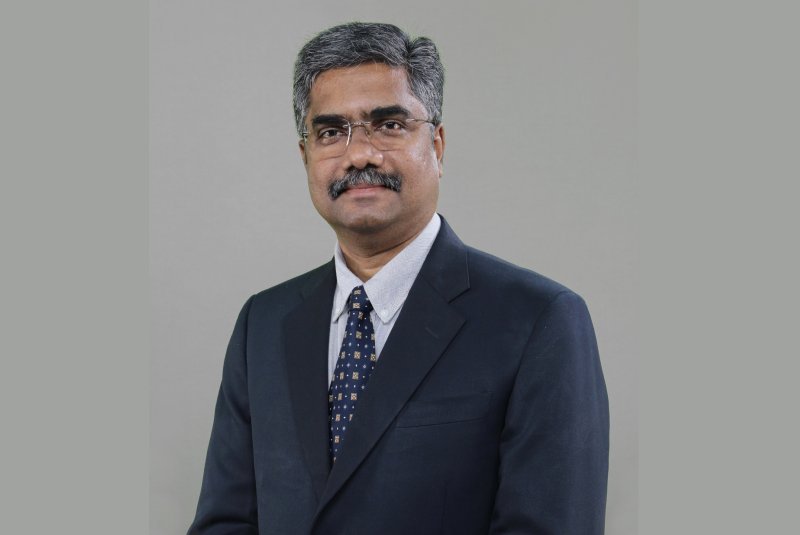
India's growing mountains of organic waste are often viewed as a disposal problem. However, according to Prof. Sankar Ganesh Palani, Professor (Research Track), Department of Biological Sciences, Birla Institute of Technology & Science, Pilani, Hyderabad Campus, they represent one of the country's biggest untapped renewable energy resources. Speaking at the Eco Sustain Expo in Hyderabad, he outlined how anaerobic digestion (AD) technology can transform biodegradable waste into clean energy, biofertilisers and high-value bio-based products, helping India advance towards its net-zero ambitions and a circular bioeconomy.
India generates around 62 million tonnes of municipal solid waste annually, with nearly 48-50% consisting of biodegradable material. Prof Sankar argued that addressing this organic fraction should become the country's primary waste management priority because it directly influences the quality of recyclable materials.
"When biodegradable waste mixes with recyclables, it contaminates them and reduces their value. Segregating organic waste at source is therefore the first and most important step," he explained, highlighting the importance of implementing India's Municipal Solid Waste Management Rules more effectively.
Moving Beyond Landfills
Despite increasing awareness about waste management, the majority of India's municipal waste continues to end up in open dumps and landfills. Only a small fraction is recycled, composted or processed through anaerobic digestion.
Prof Sankar believes this needs to change rapidly if India is to reduce methane emissions while improving energy security.
Anaerobic digestion, commonly known through its end product—biogas—offers a proven biological process in which microorganisms break down organic waste in the absence of oxygen. The technology can process a wide range of feedstocks including food waste, sewage sludge, agricultural residues, poultry litter and other biodegradable materials.
The process produces two valuable outputs. The first is biogas, typically containing 50-60% methane, which can be used directly for heat, electricity generation or upgraded into compressed biogas (CBG). The second is digestate, a nutrient-rich residue that can be processed into biofertiliser, returning valuable nutrients back to agricultural soils instead of sending them to landfill.
According to Prof Sankar, this combination simultaneously reduces waste volumes, lowers greenhouse gas emissions and creates circular value from materials that would otherwise be discarded.
A Long History, Now Entering a New Era
Although biogas is often regarded as a modern renewable energy solution, Prof Sankar noted that India has centuries of experience with anaerobic digestion.
The technology evolved from traditional systems to the floating-dome biogas plants developed by the Khadi and Village Industries Commission, followed by fixed-dome systems, the Nisargruna technology, modular biogas plants and, more recently, digitally connected facilities equipped with Internet of Things (IoT) monitoring.
The latest evolution, he said, is the integration of artificial intelligence, enabling remote monitoring, predictive maintenance and process optimisation across multiple plants from central control centres.
Policy Support is Growing
India's policy landscape has increasingly recognised the importance of bioenergy over the past four decades.
Prof Sankar traced this progression from the National Project on Biogas Development to the National Biogas and Manure Management Programme, followed by the launch of the SATAT (Sustainable Alternative Towards Affordable Transportation) initiative that promotes compressed biogas as a transport fuel.
Other government initiatives, including the GOBAR-Dhan programme and the National Bioenergy Programme, are encouraging the conversion of organic waste into both renewable energy and biofertilisers. He also highlighted India's commitment to establish around 3,000 new biogas installations, strengthening both waste management infrastructure and domestic clean energy production.
Success Stories Across India
To demonstrate the commercial potential of anaerobic digestion, Prof Sankar highlighted several successful operating projects across India, including those in Punjab, Uttar Pradesh, Indore and Bowenpally.
Prof Sankar praised Indore's city-wide segregation efforts, describing it as one of India's strongest examples of integrated municipal waste management and circular economy implementation.
From Biogas Plants to Biorefineries
Perhaps the most significant shift discussed during the presentation was the changing perception of anaerobic digestion itself.
Rather than viewing AD plants simply as biogas producers, Prof Sankar argued they should increasingly function as biorefineries capable of generating multiple high-value products.
Besides methane, anaerobic digestion can produce hydrogen, carbon dioxide suitable for algae cultivation, volatile fatty acids, alcohols and organic acids, many of which command higher market values than biogas alone. Meanwhile, the digestate can be separated and processed into improved fertiliser products, creating additional revenue streams.
This diversified product portfolio could substantially improve project economics while supporting wider bio-based industries.
Challenges Remain
Despite its potential, anaerobic digestion continues to face technical and commercial barriers.
Prof Sankar identified inconsistent feedstock quality, inadequate source segregation, long retention times, process stability, gas upgrading requirements, digestate management and high capital investment as major challenges limiting wider adoption.
However, he believes technological innovations are steadily addressing these issues through better pretreatment systems, advanced reactor designs, remote monitoring, gas upgrading technologies and modular plant configurations that reduce installation complexity.
Unlocking India's Bioeconomy
Prof Sankar sees enormous opportunities for engineering companies, technology providers, municipalities and investors.
India generates approximately 170,000 tonnes of municipal solid waste every day. If half of this biodegradable fraction were diverted to anaerobic digestion, he estimated the country could generate the equivalent of 400,000-500,000 LPG cylinders daily, while also producing approximately 14,000 tonnes of digestate suitable for agricultural use.
For a country seeking greater energy independence, lower greenhouse gas emissions and improved waste management, anaerobic digestion offers benefits across multiple sectors simultaneously.
Concluding his presentation, he emphasised that anaerobic digestion is far more than a waste treatment technology. Properly integrated, it can strengthen climate action, improve energy security, create economic opportunities and establish a truly circular bioeconomy where waste becomes a valuable resource rather than an environmental liability.