
.jpg (1).jpg)

 Search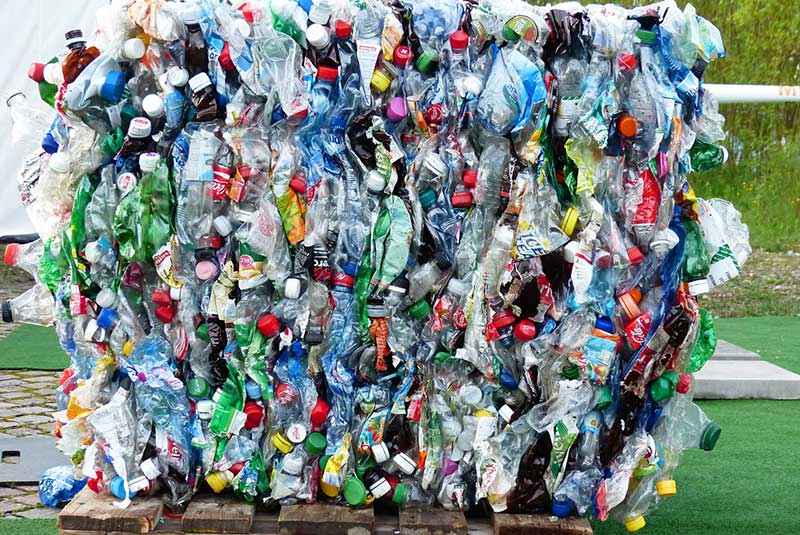
Virginia-based National Waste & Recycling Association (NWRA) has released its latest white paper, Dispelling Plastics Recycling Myths. Recent reports in the news suggested that recycling plastic is too difficult and perhaps plastic shouldn’t be recycled at all.
“The goal of this white paper, and all our white papers, is to explain issues facing the waste and recycling industry with facts,” said NWRA President and CEO Darrell Smith. “While water bottles, milk jugs, and laundry detergent bottles are commonly recycled, the fact is that not all plastics are recyclable, and this white paper explains the issues surrounding plastics recycling.”
Here is the white paper
Recent reports and media stories such as Greenpeace’s October 2022 report, “Circular Claims Fall Flat Again;” National Public Radio’s (NPR) October 2022 article,
“Recycling Plastic Is Practically Impossible– And the Problem is Getting Worse;” and City Journal’s October 2022 article, “On Second Thought, Just Throw Plastic Away–
Even Greenpeace now admits the obvious: recycling doesn’t work” are causing the public to wonder whether it should continue to recycle. This is the opposite reaction needed to address the issue of plastic waste. Instead, we should focus our efforts on improving plastic recycling.
Recyclables ARE Recycled
The NPR article suggests that “[t]he vast majority of plastic...put into blue recycling bins, is headed to landfills...” That is not true. National Waste & Recycling
Association (NWRA) members own the majority of recycling facilities in the U.S., and we can clearly and unequivocally confirm that recyclables get recycled.
Why? Because plastic recyclables have value. They are a commodity. In 2022, the index pricing for polyethylene terephthalate (PET) reached as high as $1,000 per tonne,
and natural high-density polyethylene (HDPE) reached $2,000 per ton. That is higher than the price of steel cans or cardboard.
To recover this material, America’s recycling industry has heavily invested in infrastructure improvements to capture more of it. Those investments continue with recent announcements indicating that planned investments for recycling facilities are in the billions of dollars. Recycling facility operators would not be doing this if they could not make money from recycling.
What Plastic Can Be Recycled?
In general, the plastic that can be recycled at residences is limited to #1, #2 and #5 bottles and jars. Other plastic packaging such as bags may be recycled when returned to the store. When people think about recycling plastic, they think about plastic packaging. Plastic packaging makes up about 40% of all plastics.
PET is #1 resin, and most water bottles are PET. In the U.S. Environmental Protection Agency’s (EPA) most recent report, “Advancing Sustainable Materials Management: Facts and Figures 2018,” 29.1% of PET bottles and jars were recycled.
Natural or coloured HDPE bottles are #2 resin. These include milk jugs and laundry detergent bottles. The natural HDPE bottles were recycled at 29.3% in 2018, and colored HDPE was recycled at 18.1%. Overall, 13.6% of plastic packaging is recycled. These numbers are lower than other materials such as glass containers, which are recycled at 31.3%, and aluminum beverage containers, which are recycled at 50.4%. Nonetheless, recycling is widely available and occurring for these items.
Not All Plastics Are Recyclable
Some plastics are not recyclable and not accepted by recycling facilities. The EPA breaks down plastic into three categories: durable goods, nondurable goods and
packaging. Durable goods cover materials that are assumed to be in use for more than three years.
Nondurable goods cover materials that are assumed to be used for less than three years. And packaging is anticipated to be in use for less than a year and is generally single use. According to the EPA, only about 6.8% of durable plastic goods are recycled. Durable goods include items such as appliances and furniture. Nondurable plastic goods have the lowest overall recycling rate of only 2.4%. Nondurable goods include plastic plates and cups. However, a larger portion of this category is trash bags. Other items include disposable diapers, clothing and footwear.
Instead of looking at the percentage of recyclable plastics that are recycled, both recyclable and non-recyclable plastics are lumped into a single category and from
there derive the total percentage that is recycled. Naturally, the percentage of nonrecyclable plastics being recycled would be zero and bring down the overall recycling
percentage.
If the public puts non-recyclable materials into recycling bins, then those will be disposed of as they are not recyclable. However, that is a small amount of the
overall material collected in the recycling bin. NWRA encourages brand owners to utilize recyclable packaging and the public to consider the environmental impacts of
packaging while making purchase decisions. NWRA members provide public education about what packaging is recyclable to reduce the amount of non-recyclable
materials making their way into the recycling bin.
What Does Recyclable Mean?
According to EPA, “Recycling is the process of collecting and processing materials that would otherwise be thrown away as trash and turning them into new products.” From an individual perspective, what is recyclable is based on what is accepted into the municipal recycling system. However, over the years, many
manufacturers have represented their products or packaging as recyclable when there were limited recycling options. This “greenwashing” resulted in restrictions
from recyclability claims by the U.S. Federal Trade Commission (FTC). The FTC established a threshold of 60% recycling access in order to claim that an item is
recyclable. For plastic packaging, both PET and HDPE bottles and jars meet this requirement with 100% of recycling facilities accepting these materials.
Currently, no other plastic packaging meets the FTC definition. However, more than half of the recycling facilities accept polypropylene containers, commonly used
for yogurt or sour cream.
Recycling Prices Are Volatile
Recycling prices can be high one day and drop the next. This year has seen drops of 80% in the material value for some commodities. A reliable end market with
reduced volatility is desirable.
Improving Plastics Recycling
Plastic recycling is real. It is happening. But it still has a long way to go to catch up to other commodities. NWRA members are investing in new infrastructure to improve
recycling. We also are encouraging increased plastic recycling by supporting the use of recyclable packaging.
To achieve true circularity in recycling, we also need to create additional demand by requiring minimum post-consumer recycled content. NWRA has developed model legislation to promote this.
Focusing On A World Without Plastic Pollution
Plastics are not going away. As a material, it can provide numerous advantages. As a packaging option, it generally offers a better greenhouse gas footprint2
than alternative packaging. Yet, plastics, in particular plastic packaging, have created environmental problems for wildlife by showing up in the most remote places on
the planet. This emphasizes the need for appropriate end-of-life management for all products, especially plastics. Rather than focusing on a world without plastic, we
need to focus on a world without plastic pollution.