
.jpg (1).jpg)


 Search
Copper scrap availability continues to be tight despite LME surge
“Copper scrap is not flowing as freely as it was” because “governments all around the world are becoming more protectionist”, resulting in “more and more barriers to keep it ring-fenced in every geography”. So said Edward Meir, independent consultant to Marex, in his contribution to the latest meeting of the BIR Non-Ferrous Metals Division staged at the Bella Sky Hotel in Copenhagen on May 27.
Focusing mainly on copper, the guest speaker attributed the metal’s recent price “explosion” to a confluence of factors, including mining issues, aggressive fund buying and strengthening demand for applications relating to electric vehicles and artificial intelligence. Having acknowledged forecasts that copper prices could yet head significantly higher, he pointed out that “we are not seeing scrap coming out” despite the surge on the LME. “This shows how tight the market is,” he said.
Despite hitting a two-year high in May, aluminium has not seen the same strong buying as copper, partly because it is less impacted by developments in electric vehicles and artificial intelligence, and also because the far greater number of aluminium producers around the world serves to alleviate concerns of a squeeze, according to Mr Meir.
“We see sustainability as a huge challenge and something our customers come to us to demand,” explained fellow guest speaker Andreas Fenster, Vice President Metals Management Europe at Wieland-Werke AG in Germany. Customer inquiries regarding carbon footprint and recycled content were increasing significantly in number and complexity, he told delegates in Copenhagen.
Mr Fenster’s company is among the world’s leading suppliers of semi-finished copper and copper alloy products, with a manufacturing and service network spanning North America, Europe and Asia. It has set a goal of increasing recycled content in its products to more than 90%, entailing consumption of some lower grades of scrap that the business has not used in the past such as No.2 copper/Birch Cliff.
Even higher copper prices would hurt struggling companies - not least because of the elevated financing costs, stated Mr Fenster during a panel discussion involving the guest speakers, divisional President Paul Coyte of Hayes Metals in New Zealand, Elinor Feuer of Sweden’s Chilanga AB, Murat Bayram of European Metal Recycling in the UK and Christian Bonnicksen of HJ Hansen Recycling Group A/S in Denmark.
On the issue of regulations, Mr Fenster described compliance pressures as “challenging”, highlighting in particular the large amount of work created by the EU’s Carbon Border Adjustment Mechanism for imports of carbon-intensive goods.
Mr Bayram and Mr Bonnicksen agreed that regulations were often unclear and subject to differing interpretations from country to country. Mr Bayram urged interested parties to harmonize their advocacy efforts and to become “louder and more visible” before legislators “create the next monster for our industry”.
BIR is now commissioning a major study on the environmental benefits of recycling which would help in discussions with legislators and policy-makers as this would call for a greater conversation based on facts, according to Mr Coyte.
***
Ferrous Division: Super-rapid market insights using satellite technology
 At the BIR Ferrous Division’s session on May 28, guest speaker Atilla Widnell invited his audience into the fascinating and ultra-modern world of end-to-end supply chain monitoring from space.
The Managing Director of Singapore-based Navigate Commodities explained how his company was using powerful satellite-based technologies to track everything from smelter activity and asset development to stockpiles and movements of short-/deep-sea vessels as well as barges. It was possible, for example, to “zoom out” to acquire a national consumption picture and to identify from where material flows were being pulled.
Updates every four hours enabled users to make strategic decisions closer to real time, according to Mr Widnell. “Our data tends to lead customs data,” the speaker observed, adding that the information performed “incredibly well” against industry benchmarks.
Among the insights offered by Mr Widnell to the meeting in Copenhagen, he pointed to a sharp drop in Turkey’s EAF activity over recent months. He also noted that, since the start of the Red Sea crisis, the number of vessels using the Suez Canal had fallen from typically 80 per day to nearer 40.
In other market observations, he indicated that recycled steel generation should be slowly improving in most parts of the developed world and that a “terrible” domestic market for steel in China had put the country on a course to record annual steel exports of more than 100 million tonnes this year for the first time since 2016.
The technology described by Mr Widnell dominated the subsequent panel discussion moderated by BIR Ferrous Division President Shane Mellor of UK-based Mellor Metals Ltd, who was accompanied on stage by: George Adams of SA Recycling in the USA; Denis Reuter of TSR Recycling GmbH & Co. KG, Zentrale in Germany; Mogens Christensen of HJ Hansen.
Recycling Group A/S in Denmark; and Alton Scott Newell III of Newell Recycling Equipment in the USA.
In response to a question from Mr Reuter about the precision of the technology, Mr Widnell contended that “you’re never going to be able to get 100% accuracy” and that he would expect a 10-15% margin of error. Everyone from the recycling industry who had seen the technology was “very receptive” to it, he added.
The Ferrous Division meeting in Copenhagen also featured the release of the fifteenth edition of “World Steel Recycling in Figures”. Identifying some of the publication’s highlights, Statistics Advisor Rolf Willeke confirmed that recycled steel usage across key countries and regions dropped 12% in 2023 at 411.281 million tonnes despite a 0.2% increase in their total crude steel production to 1.555 billion tonnes. These figures represent verified data for 82.2% of global steelmaking.
China remained the world’s largest user of recycled steel although its total slid 0.8% year on year to 213.68 million tonnes, equating to a 21% share of its crude steel production. The recycled steel use share was as high as 86.3% in Turkey last year, although 2023 also brought a 10.1% drop in the country’s overseas recycled steel purchases to 18.775 million tonnes. However, this decline failed to dislodge Turkey from its long-held position as the world’s foremost recycled steel importer, with India in second place following a 40.4% increase to 11.760 million tonnes.
Once again, the leading recycled steel exporter in 2023 was the EU-27 following a 9.2% year-on-year increase to 19.219 million tonnes; the USA came next despite its overseas shipments dipping 6.9% to 16.264 million tonnes.
***
Paper Division: End-of-waste status holds key to preserving vital export outlet
 End-of-waste status is pivotal to the survival of Europe’s recovered paper industry beyond 2027 given the potential for the EU’s newly-revised Waste Shipment Regulation (WSR) to block flows to non-OECD countries, according to BIR Paper Division President Francisco Donoso of Spain-based Dolaf Servicios Verdes SL. “This is very serious,” he told delegates at the divisional meeting in Copenhagen on May 27. “The WSR is a risk to our business as it restricts exports out of Europe.”
Implementation of the new regulation needed to be “pragmatic”, he warned, or the market in Europe would be destroyed by a massive surplus that could no longer be exported.
Mr Donoso noted that end-of-waste existed in some European countries - including Spain and Italy - but that universal adoption should be the objective. He also urged major importers of the EU’s recovered paper, notably India and countries in South East Asia, to actively support efforts within Europe to establish end-of-waste as a solution to the export obstacles presented by the revised WSR.
Earlier, divisional General Delegate Fátima Aparicio of Repacar in Spain explained the scope for recovered paper and cardboard to shed its waste status by satisfying certain criteria, including processing to accepted benchmarks such as quality standard EN 643. Adoption of end-of-waste status across Europe and beyond could play an important role in promoting circular economy goals but, she lamented, there was currently no harmonization.
Three guest speakers in Copenhagen combined to provide an overview of the recovered paper market. Hannu Oskari Hara, Trading Desk Manager at Norexeco ASA - The Pulp and Paper Exchange, traced the volatility of OCC in Europe and outlined how a commodity exchange could assist in the management of price risk exposure.
John Atehortua, Regional Trading Manager for Recovered Paper at Cellmark in the Netherlands, also highlighted extreme levels of volatility in the US market where prices had increased 150% on a year-on-year basis. Harsh winter weather conditions had played a part in stifling supply, to the extent that some mills had been forced into temporary line closures. In terms of demand pull, more and more policies were emerging to promote minimum recycled content in packaging.
OCC exports from the USA fell from 17 million tonnes in 2022 to 13 million tonnes the following year, he added.
Simone Scaramuzzi, Commercial Director of LCI SRL in Italy, surveyed the Asian paper recycling landscape and its main European suppliers, noting that recovered paper imports had surged to around 7 million tonnes in 2023 on the back of particularly strong growth in India’s purchases. New production capacities in Europe would create more competition from Asian mills in order to maintain their import quotas, he added.
The meeting in Copenhagen also witnessed the presentation of the BIR Paper Division’s latest Papyrus Award to US-based International Paper, the world’s largest paper producer. Accepting the award on behalf of the company, Jose Carlos Chimeno Fidalgo underlined its huge scale with almost US$ 19 billion of net sales last year and its commitment to being among the most successful, sustainable and responsible businesses in the world.
Conferred on companies and individuals since 2008, the Papyrus Award recognizes exceptional contributions to paper recycling.
***
Plastics Division: Design for recycling is key to the transition to a more sustainable plastics system
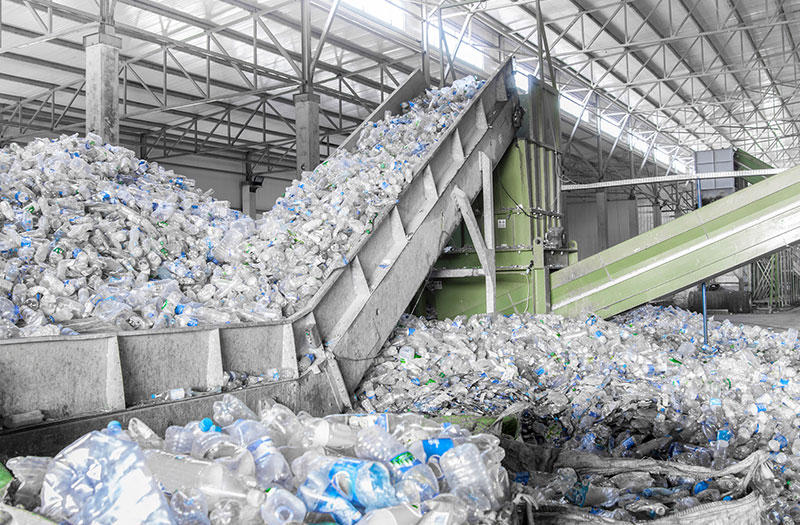 Only a few minutes after the BIR General Assembly had ratified the elevation of the world recycling organization’s Plastics Committee to Division status, its President Henk Alssema stood at the podium in Copenhagen’s Bella Center and declared to cheers and applause: “Welcome to the meeting of the Plastics Division - we can finally say that now.”
Mr Alssema, of Vita Plastics in the Netherlands, went on to express the hope that this change would “lead to even more awareness of the importance of plastics recycling”.
But it was immediately back to business as Mr Alssema reported tough conditions for plastics recyclers owing to, among other reasons, rising production costs, staff shortages and an unpromising investment climate. Colleagues on the Plastics Division board also highlighted some of the challenges facing recyclers: Sally Houghton of The Plastic Recycling Corporation of California reported pressure from cheap imported material coming mainly from South East Asia; and Dr Steve Wong of Fukutomi Recycling Ltd in China lamented “very high” transportation costs and difficulties in finding profitable feedstock. However, Max Craipeau of Hong Kong-based Greencore Resources Ltd chose to focus on the positive of mandates pushing brands towards incorporating more recycled content into their products.
Details of the Plastics Europe roadmap for a sustainable plastics system were presented to the meeting in Copenhagen by the organization’s Senior Policy Manager Dominic Byrne. Aims included making plastics more recyclable, driving lifecycle emissions to net zero and fostering the sustainable use of plastics. Among the challenges presented by these goals, he highlighted the need for improved waste collection, further innovation in recycling and a supportive policy/regulatory framework.
The estimated additional plastics system cost of this transition would be Euro 235 billion, Mr Byrne stated.
Having noted that the roadmap supports the development of chemical as well as mechanical recycling technologies, Mr Alssema pointed to BIR’s recently-released position paper calling for mechanical recycling to remain the preferred large-scale approach and for chemical recycling to be limited to hard-to-recycle end-of-life plastics. Mr Byrne described the two options as “very complementary” and, when looking to the longer term, did not expect chemical to overtake mechanical in the plastics recycling mix.
In response to a comment from Robin Wiener, President of the US Recycled Materials Association, on how the complex array of plastic compositions and additives made recycling impossible in certain instances, Mr Byrne said: “It is something we are working to improve upon. We do see design for recycling as key to that.”
Ms Wiener emphasized that recyclers had “a part to play” in delivering greater sustainability and would welcome a co-operative approach. Earlier, Mr Byrne had insisted: “We need to work together; we need to collaborate.”
Xavier Lhoir of Belgian extended producer responsibility organization Valipac switched the focus of the session to new EU legislation. Under the revised Waste Shipment Regulation (WSR) entering force on May 20, he noted, exporters would have to demonstrate that their waste would be managed in an environmentally sound manner by ensuring independent audits were conducted on the facilities to which it was destined. He went on to provide a snapshot of plastic shipments from Belgium to OECD and non-OECD countries, noting that eight out of 98 recycling facilities had failed to achieve compliance mainly through an absence of necessary licences, use of child labour and major environmental issues.
Mr Lhoir called for the development of a certification scheme which guaranteed compliance of the audited recycling facilities with EU regulatory requirements. This could remain open to any independent third party with respect to WSR criteria and would guarantee a high level of quality and credibility.
The same speaker also noted that the new EU Packaging and Packaging Waste Regulation establishes some challenging goals for minimum post-consumer recycled content.